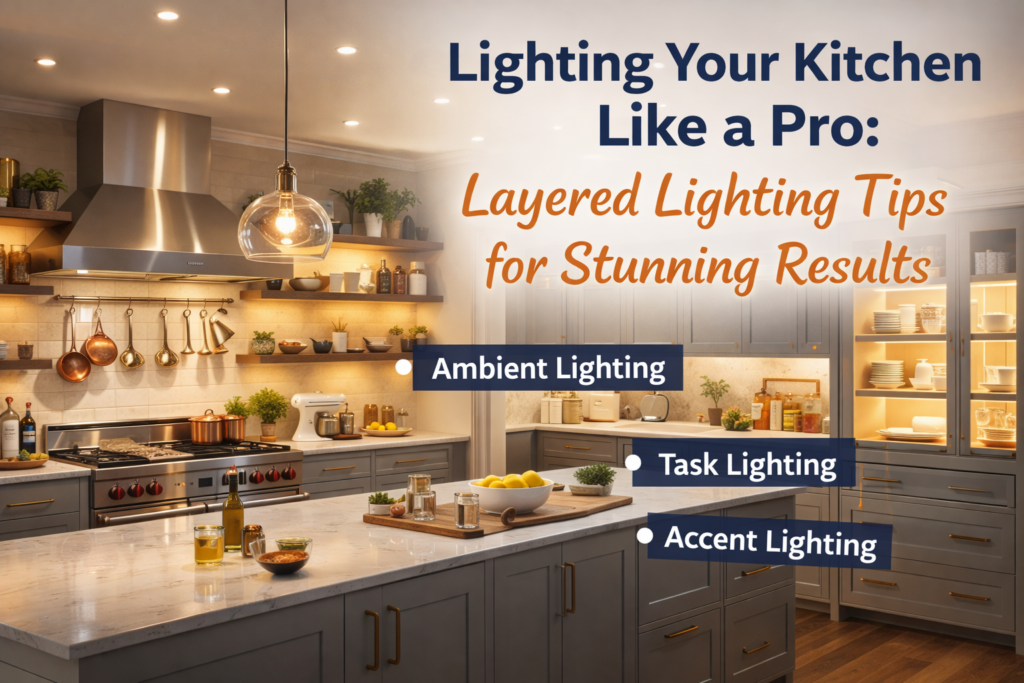
Lighting is one of the most important yet often overlooked elements of kitchen design. The right lighting makes your kitchen look beautiful, feel inviting, and work efficiently. For many homeowners, a well-lit kitchen can make cooking safer, cleaning easier, and even enhance the overall mood of the home. If you want a professional-looking kitchen, it’s essential to understand layered lighting and how to use it effectively. This guide will explain everything you need to know about layering light for stunning results in your kitchen.
Why Layered Lighting Matters
Layered lighting combines different types of light to create a balanced, functional, and attractive space. Relying on a single overhead fixture can leave dark corners and create shadows that make cooking and cleaning difficult. By using a combination of ambient, task, and accent lighting, you can achieve both functionality and style. Ambient light provides overall brightness, task lighting focuses on work areas like counters and islands, and accent lighting highlights features such as cabinets or decorative elements. Layered lighting ensures your kitchen is practical and visually appealing.
Ambient Lighting: The Foundation
Ambient lighting is the general light that illuminates the entire kitchen. Ceiling-mounted fixtures, recessed lights, and chandeliers are common examples. When planning ambient lighting, think about even distribution to avoid dark spots. LED ceiling lights are energy-efficient and provide bright, long-lasting illumination. Ambient lighting sets the tone for the kitchen and creates a welcoming atmosphere. It’s the first layer in a well-lit kitchen and should provide enough light for safe and easy movement throughout the space.
Task Lighting: Focus on Function
Task lighting is all about visibility where it matters most. This includes countertops, sinks, stoves, and prep areas. Under-cabinet lights, pendant lights above islands, and adjustable track lighting are excellent options. Task lighting reduces shadows that can make chopping, measuring, and cooking difficult. When designing your kitchen, place task lights directly above work areas and choose bright, focused light sources. Proper task lighting makes cooking easier, safer, and more enjoyable, especially for serious home cooks or anyone who spends a lot of time preparing meals.
Accent Lighting: Add Drama and Style
Accent lighting is used to highlight specific areas or features, adding depth and visual interest to your kitchen. Examples include LED strips inside glass cabinets, lights above open shelving, or wall-mounted sconces. Accent lighting draws attention to design elements such as artwork, backsplash tiles, or decorative appliances. While not essential for functionality, accent lighting enhances the overall aesthetic and creates a professional, polished look. When planning your kitchen, think about where you want to create focal points and how accent lights can enhance these areas.
Consider Lighting Temperature and Color
The color temperature of your lights affects the mood and functionality of your kitchen. Warm white lights (2700–3000K) create a cozy, inviting feel, while cool white lights (3500–4100K) enhance visibility and focus. Neutral white lights (3000–3500K) strike a balance between comfort and clarity. For task areas, slightly cooler lighting is ideal because it mimics daylight and makes it easier to see fine details. Mixing temperatures carefully ensures your kitchen is both functional and visually pleasing.
Use Dimmers and Smart Controls
Dimmers and smart lighting controls give you flexibility to adjust brightness and mood. You can use bright light for cooking or cleaning, then lower it for dining or entertaining. Smart bulbs and systems allow you to control multiple zones independently, creating the perfect lighting combination for different activities. Dimmer switches also extend the life of bulbs and save energy. Integrating dimmers and smart controls is an easy way to make your layered lighting design adaptable and future-proof.
Plan for Natural Light
Natural light is an excellent complement to artificial lighting. Large windows, skylights, or glass doors allow daylight to brighten your kitchen. Natural light reduces the need for electric lighting during the day and makes the space feel larger and more welcoming. When designing your kitchen, consider how sunlight enters at different times and place work areas accordingly. Combining natural and layered artificial lighting ensures your kitchen is bright, comfortable, and energy-efficient throughout the day.
Final Tips for Professional Kitchen Lighting
- Use a combination of ambient, task, and accent lighting for a balanced look.
- Choose fixtures and bulbs that match your kitchen’s style and functionality needs.
- Pay attention to light placement to avoid shadows in work areas.
- Consider dimmers and smart controls for flexibility and energy savings.
- Incorporate natural light whenever possible to enhance brightness and mood.
Layered lighting transforms your kitchen from ordinary to extraordinary. With careful planning, you can create a space that is beautiful, practical, and enjoyable to work in every day.